Ralph Waldo Emerson

Learn to Journal like Ralph Waldo Emerson (Week 4 of 6)

Last week, I talked about John Locke’s method of indexing a journal and how Emerson abandoned it in favor of something simpler. 📚Emerson kept three main types of journals: Pick one to three key topics you’re most passionate about. I’ve chosen Philosophy and Writing. Then create a topic-specific journal for each. Finally, get one journalContinue reading Learn to Journal like Ralph Waldo Emerson (Week 4 of 6)


Learn to Journal Like Ralph Waldo Emerson (Week 3 of 6)

A good index is a beautiful thing. Flip to the back of a nonfiction book and you’ll find every topic discussed, along with the page numbers where it appears.​Here’s a shot of the index from The Mind on Fire, a biography of Emerson’s life. Okay, what do we have here? On the very first page ofContinue reading Learn to Journal Like Ralph Waldo Emerson (Week 3 of 6)

Quote by Ralph Waldo Emerson

Learn to Journal Like Ralph Waldo Emerson (Part 1 of 6)

First, let’s get some semantics out of the way. I prefer the term “notebook,” which to me sounds like a working tool for thinking.  However, Emerson referred to them as “journals,” so we’ll stick with his terminology throughout this series–even though “journal” reminds me of my grandmother, who wrote about the weather in her “journal”Continue reading Learn to Journal Like Ralph Waldo Emerson (Part 1 of 6)

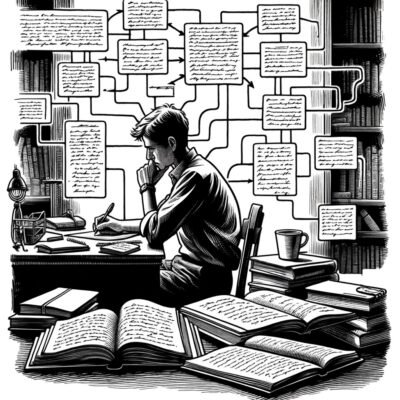
A young man sitting at a desk making notes.

Making Notes vs. Taking Notes

When you read a book, you can approach it passively, letting the words wash over you without leaving a lasting impression. Alternatively, you can engage actively by starting a note-taking system. The distinction between making notes and taking notes isn’t originally mine, but it’s a concept worth exploring. If you’re new to this idea, here’sContinue reading Making Notes vs. Taking Notes